
The 5 key pieces of a Retail Email Marketing programme
One of the sectors in which email generates the highest ROI is retail. The increase in users who shop online, combined with the specific weight of the brand in this industry, largely explain why campaigns targeting these users are so effective. email marketing in retail they generate such good results. However, It is common to find, especially in companies brick and mortar, a low-intensity email marketing operation, that is, poorly optimized. From our agency, we often encounter retailers that have a significant gap between their current development of email marketing programs and the revenue-generating potential they could achieve with another. In this post we present: The 5 key elements that, in our opinion, should form an essential part of any retail email marketing program.
1. Welcome program
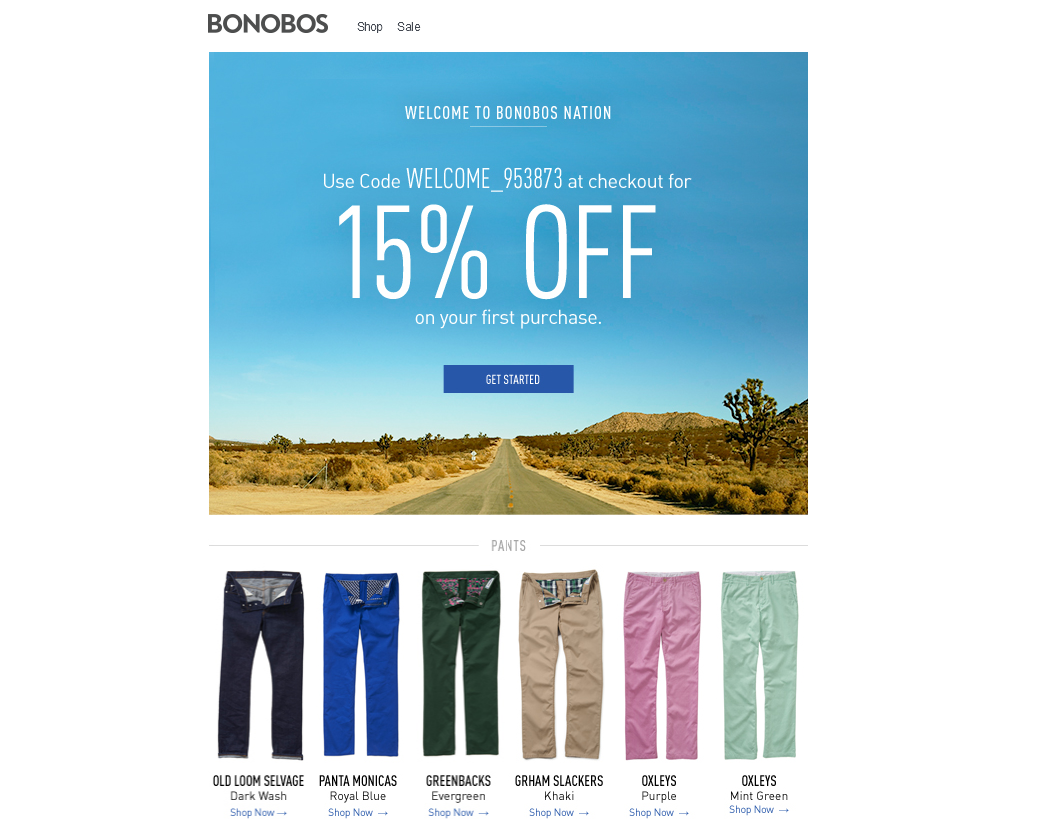
A welcome program primarily aims to create a good user experience in the first interaction with the brand; the context is a dialogue (the brand responds, welcomes). This is a hot spot of the «customer journey» where the user has a very good predisposition to interaction. The specific approach we take to the response at this moment will depend on each brand. Some ideas that may be considered are:
- Thank you for showing interest in the brand
- Explaining the benefits of being a member of an email marketing program
- Encourage a first purchase
- Promote the user to follow the brand on other online channels (Facebook, Twitter, Pinterest)
- Send a series of welcome emails in which 2 or 3 emails are sent over a period of one, two or three days.
- Exposing what functionality of e-commerce the user has available (Wishlist, store locator, outlet, etc.)
2. Cart abandoned program
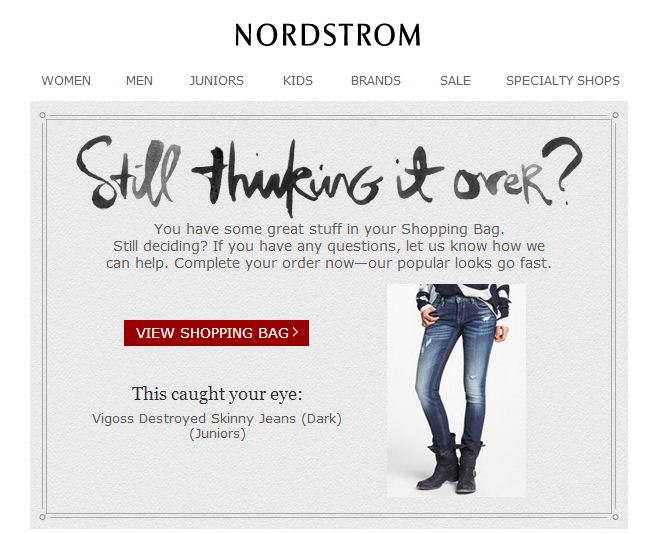
A program of this nature aims to recover the shopping carts abandoned during the check-out process in e-commerce. It is important to take into account the high rate of abandoning the shopping cart in e-commerce, which can range from 55% to 80%. A good abandoned cart recovery program can recover between 15% and 25% of the abandoned carts.. In this link you will find 10 tips that you can follow in creating this type of programs.
3. Recommendation engine
One of the tactics that work best to increase conversions is the use of recommendations based on behavioral patterns that establish the probability that a user will respond to a product or offer based on how other users have responded. For example, it can be determined that it is statistically significant that users who purchase product A tend to then compare it with product B. If this is the case, it makes sense to show product B to the user who visits the site after having purchased product A. This recommendation system can be implemented both in e-commerce and in the emails sent, whether promotional or transactional.

In 2014, the number of emails opened from mobile devices already exceeded 50%.. On the other hand, according to State of Mobile Commerce Q4 2014 from Criteo Mobile commerce accounts for more than 30% of global e-commerce sales, With the United Kingdom (41%) and Spain (28%) being two of the countries at the forefront of this trend, it is imperative to adapt all digital environments to the mobile user experience, and this means using responsive email design in the field of email marketing. We leave you this practical case to illustrate this point..
5. Integration between e-commerce and the ESP
In most of the retailers with whom we have had the opportunity to collaborate, we started from situations where the shipping platform (the ESP) had a flat table with a series of fields containing socio-demographic information. This situation limits the potential for segmentation and analysis that could be achieved if the data from e-commerce were taken into account. It is precisely here that tables with information about each user’s transaction history, their spending history, the items purchased, etc. exist. It is true that the ESPs allow tracking transactions after an email, but only for a limited period of time. so that we can use conversion information, but If we want to introduce the history of orders and products purchased, we will need true integration between the ESP and the e-commerce system. The effort is worth it, since it will allow us to provide more personalized communications and achieve a higher conversion rate.
