What kind of data can I use to segment an email campaign?

We always emphasize the importance of make a good segmentation To be able to target our users more personally and effectively within our database. In fact, the key to achieving effective segmentation lies in knowing them very well. What kind of data can we use and what do we achieve with each of them?. Today we will look at the 7 main ones:
1- Declarative
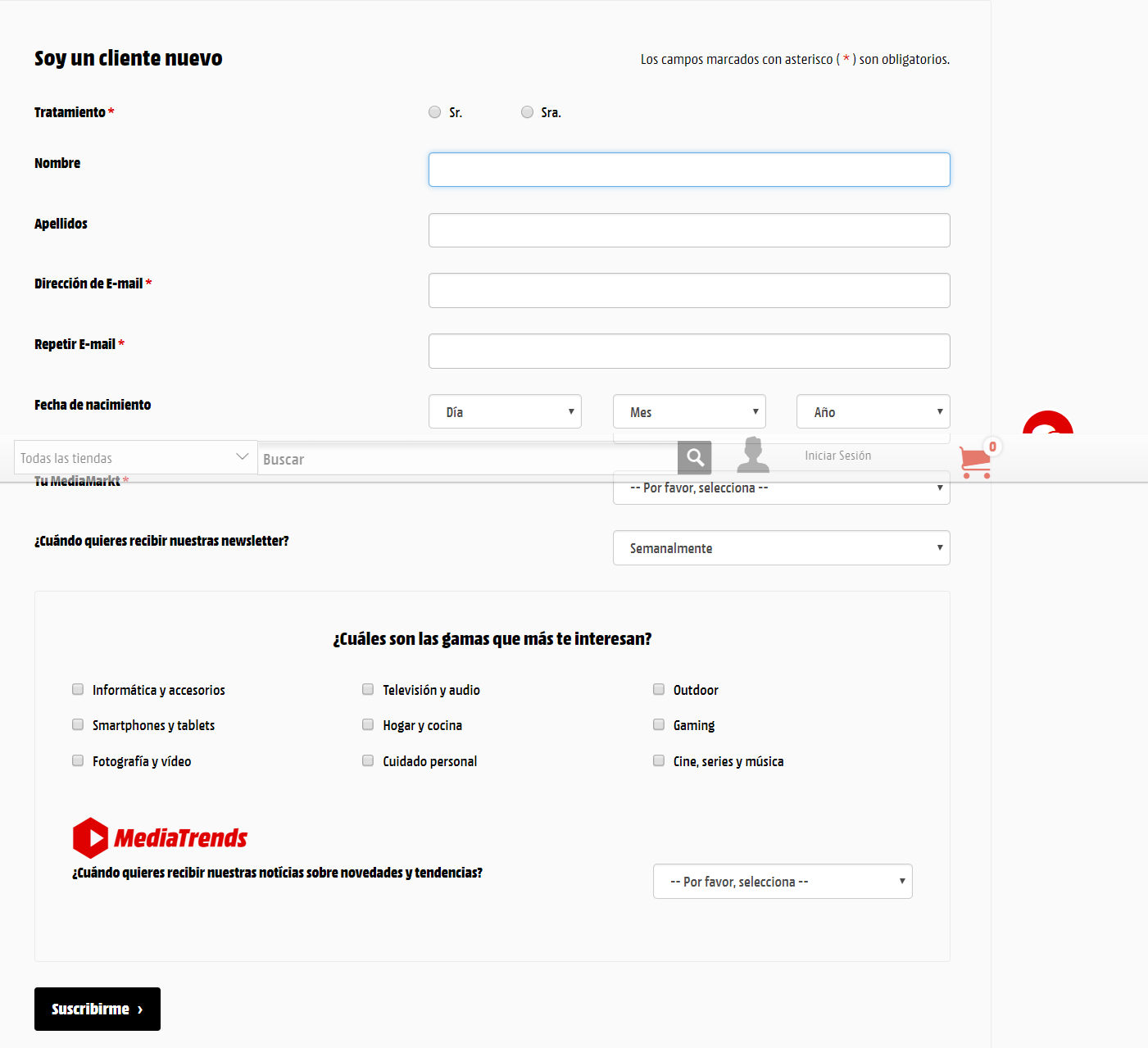
Declarative data is derived from the information that a user declares when they provide us with their data. This information can be: socio-demographic (age, sex, population, language, civil status, etc.) or according to their interests (It tells us what their tastes and preferences are). Then we can see the subscription form for the newsletter Madia Markt, a good example that allows us to understand where the declarative data comes from.
2- Behavioral
Behavioral data, as its name suggests, takes into account the user behavior related to their activity on the website (what they are looking for, where they navigate, how long they spend on a page), their purchase behavior (where they buy it, how often), their activity when they receive an email (they open it or not, click on some link or not, unsubscribe) or the frequency with which they visit the physical stores.
3- Transactional
Transactional data shows the transactions performed by the user with the brand (amounts of each transaction, payment methods, whether you bought online or offline, products purchased…).
4- Origins of the record
These data show the the origin of where a particular user's record comes from. For example, if we have a user who registers after having done a Google search, we will identify that registration as coming from an Adwords ad or an organic search. But we will also have other users who come from lead generation activities, such as email marketing campaigns based on third-party databases, or by filling out an application in a physical store.
5- Identifier of the stadium in the life cycle
It is very important to know in what phase of user life cycle All subscribers are found (acquisition and activation, conversion, growth, retention or reactivation, and therefore, when we talk about prospects, customers, recurring customers, VIP customers or inactive subscribers. Depending on their level of involvement, the email campaigns that will be sent will contain one type of message or another.).
6- Segment identifier
Imagine that we have a sports product store and that, within the users we have identified in the growth phase, we have detected three clusters that repeat in an invariable way: users who buy products from the categories «outdoor», «water» and «indoor». It would be interesting to label each member of our database with an identifier of the cluster they belong to, so that we take this reality into account in each of the communications we carry out.
7- RFM cells
The Segmentation by Recency, Frequency and Monetary Value Common to traditional direct marketing is that it is very useful for predicting user behavior regarding a particular promotion. The idea is that users will be more inclined to respond to a message the more recent their last interaction with the brand has been (both online and offline), the more frequent their interaction with the brand has been in the past, and the greater the spend they have made so far. Of the three variables, The recent It has proven to be the indicator that best predicts a user's future behavior.
That's it for the explanation of the 7 main data types that allow you to segment a database. And what are your favorites for segmenting your email marketing campaigns? Do you use any other types of data that aren't mentioned in this post?