
3 Myths about Email Marketing
We often find that clients are confused about their real objectives and are unclear about the best practices for the effectiveness and profitability of their email marketing. Therefore, in this post we want to discuss some misleading claims that are often heard in the sector.
1. The key is to obtain a large volume email list.
The more people we reach, the greater the chance of response and conversion, right? Not exactly. We can have a large mailing list and still be losing money with email marketing, so before volume, our goal should be quality. Sometimes, we even find that smaller lists can yield greater profitability. What we should try to achieve is to reach the largest number of users with a genuine interest in the information we send. Let me give you an example: a few weeks ago, we sent an email to 47,000 users and obtained 30 conversions. The following week, we sent the same email to users who had opened the email but hadn’t completed the transaction: 7,000. These are users who have shown initial interest in the information we sent, so our audience is now much smaller, but their interest is much more pronounced. The result: we stopped dedicating resources to the 40,000 users in the initial list, and we obtained 25 more transactions.
2. Our goal should be to improve open and click rates
No. This is not our goal. Our goal is conversion (into a customer, a subscriber, etc.) and the opening rates Click and CTR are directly related, but we can't let the obsession with increasing the open rate or CTO cloud our real view of the results we achieve. Let's look at the data: conversion whenever we can attribute it to this channel. Understand what leads the user to complete the expected action and orient our strategy based on this information, avoiding gimmicky tactics to increase common email metrics that can lead us away from reality.
3. We must prevent users from unsubscribing.
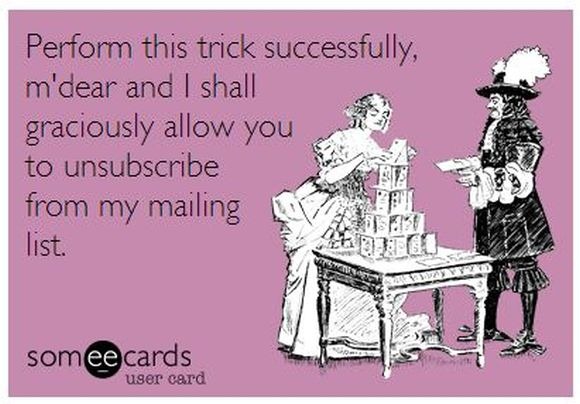
This statement may be correct, if we understand it as meaning that we should send information consistent with the user's interest, relevant to their needs and context. Yes, we should avoid disengaging the user by avoiding too frequent sending frequencies or information that is not relevant. BUT we should not prevent the user from unsubscribing by hiding the unsubscribe link, making the process cumbersome or omitting contact information (required by law). In this way, we will only have a large but low-quality list, contradicting point one. We will have in our database users who are not interested in the communications, who only subscribe because of the difficulty in canceling the subscription. These users can only make us lose money and resources., In addition to increasing the risk of complaints being filed SPAM that would tarnish our reputation as senders, causing delivery problems, and even legal problems.
